Documentation index: llms.txt. This page is also available as markdown: append .md to this URL or send Accept: text/markdown.
Google SSO with SAML
Connect Catalog to Google Workspace using Single sign-on (SSO) with SAML. This guide walks you through registering a SAML app in Google Workspace and configuring it in Catalog.
Prerequisites
Before you begin, ensure you have the right access. You must be an administrator or have security privileges on your company’s Google Workspace.
Set Up Your Google Workspace
Configure the SAML app in your Google Workspace admin console.
-
In your Google Workspace admin console, go to Apps > Web and mobile apps and click Add custom SAML app.
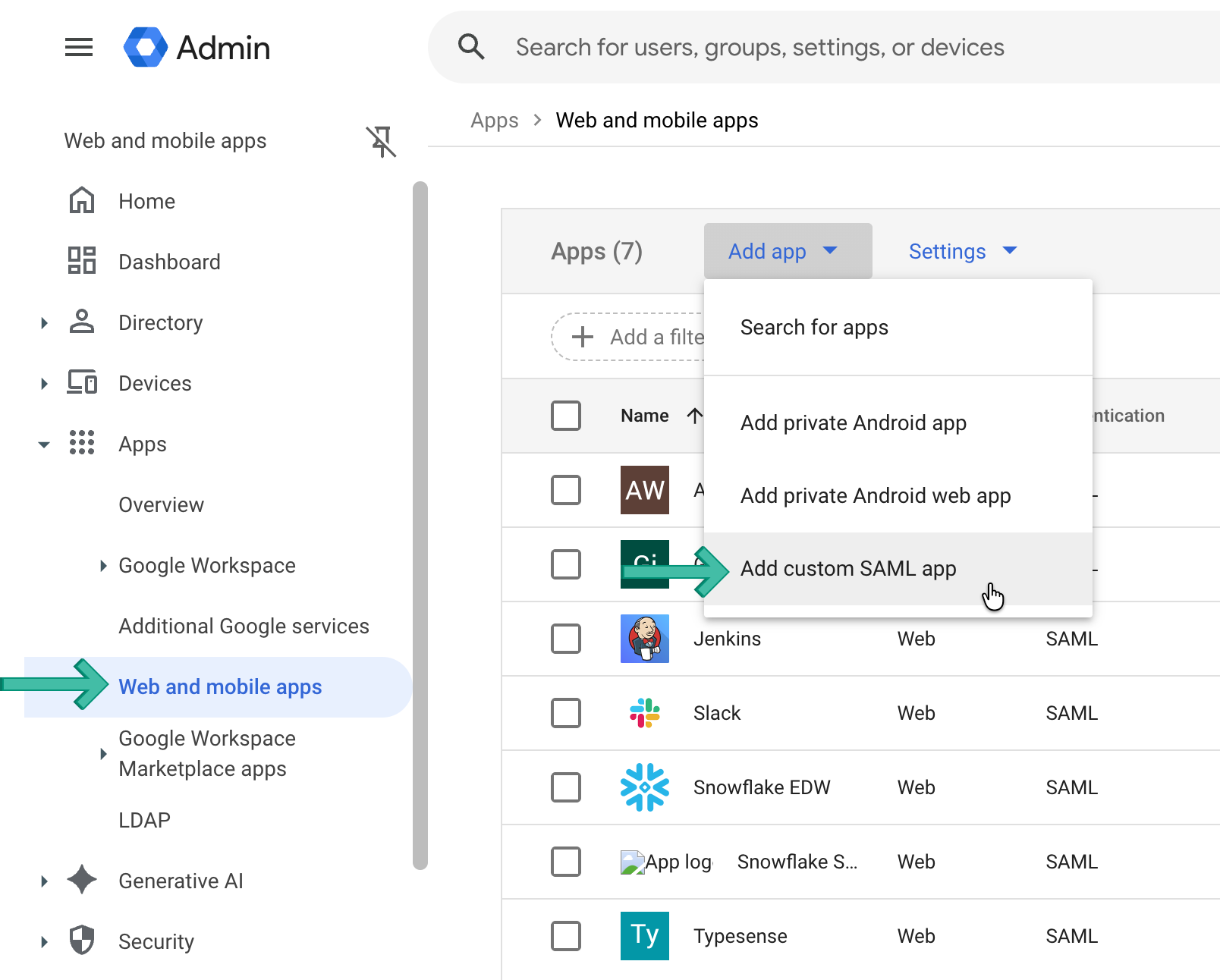
-
In App details, add the app name.
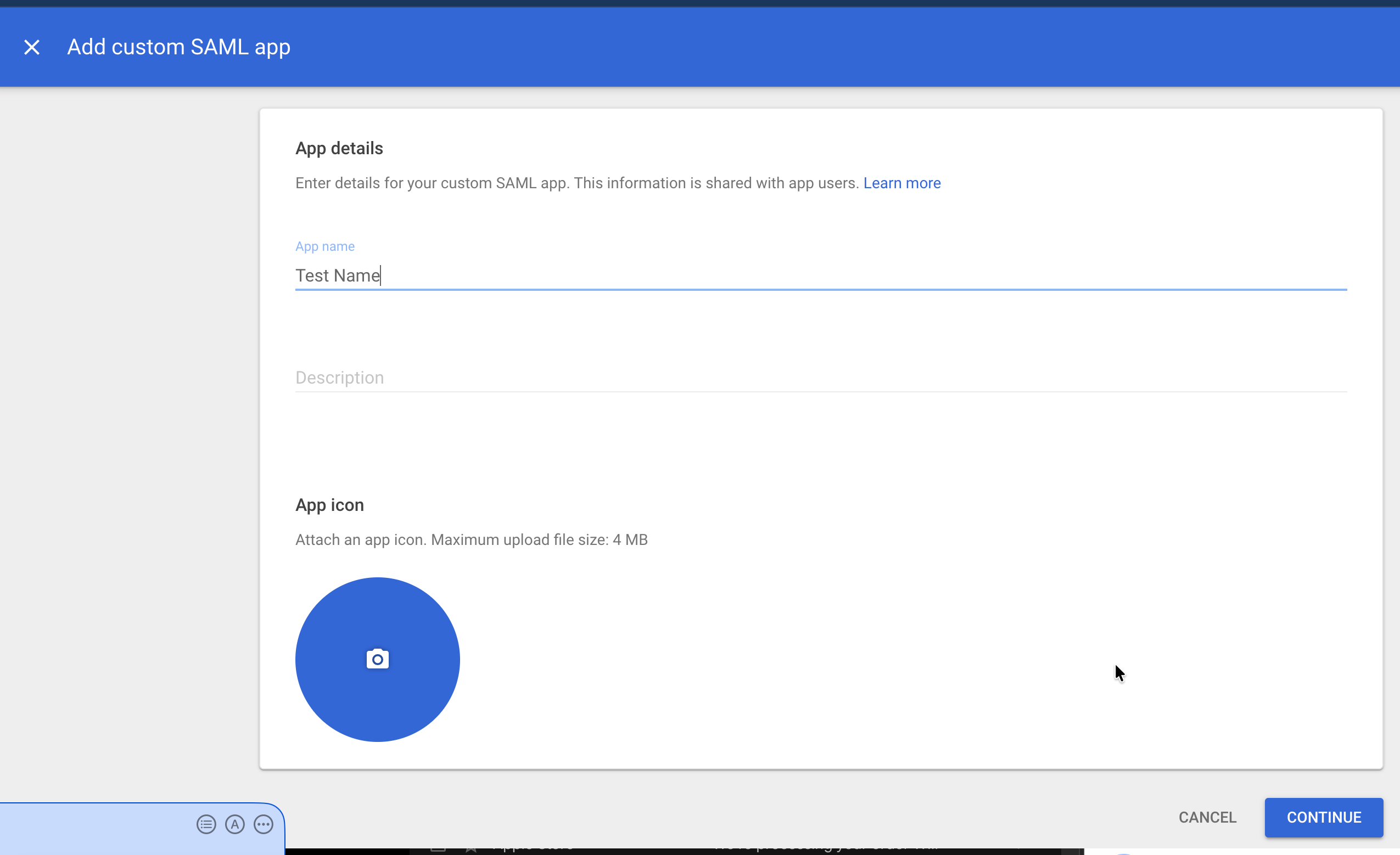
-
In Google Identity Provider details, you'll see Option 2: Copy the SSO URL, entity ID, and certificate. Save the SSO URL and certificate for later.
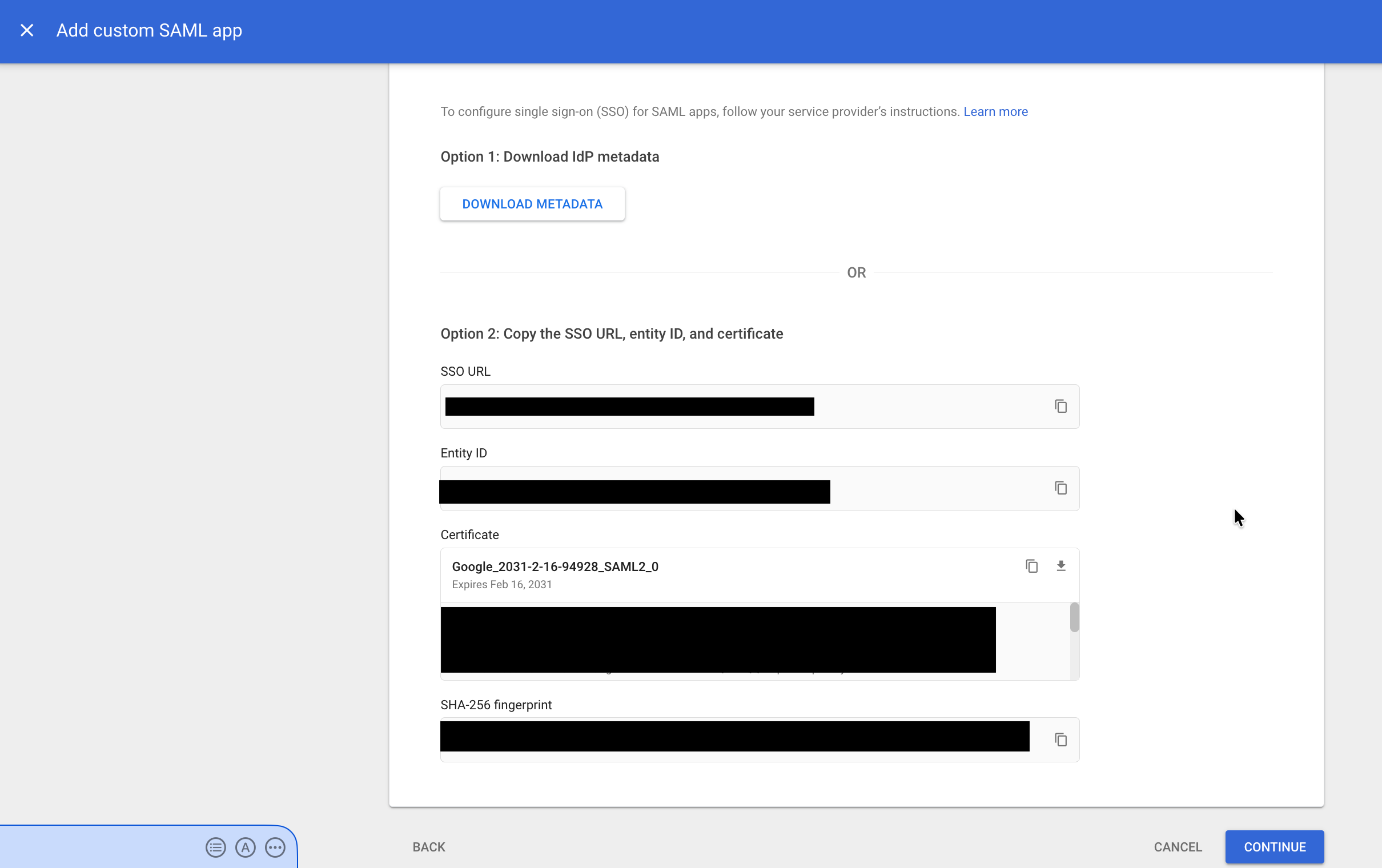
-
In Service provider details, set the ACS URL to:
https://api.castordoc.com/auth/saml/callbackfor accounts usingapp.castordoc.comhttps://api.us.castordoc.com/auth/saml/callbackfor accounts usingapp.us.castordoc.com
-
Set the
entity_idtoproduction-castorSAML.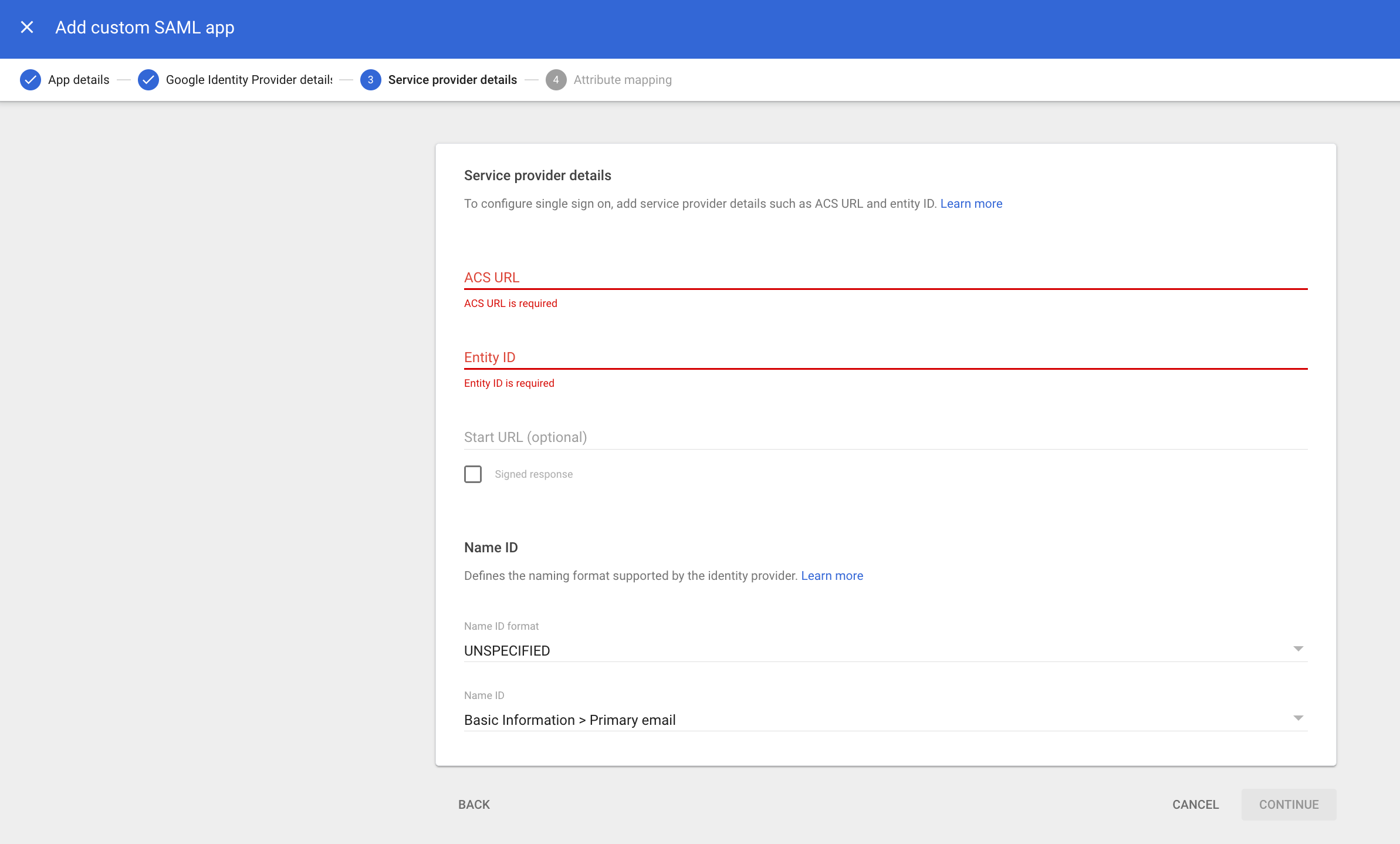
-
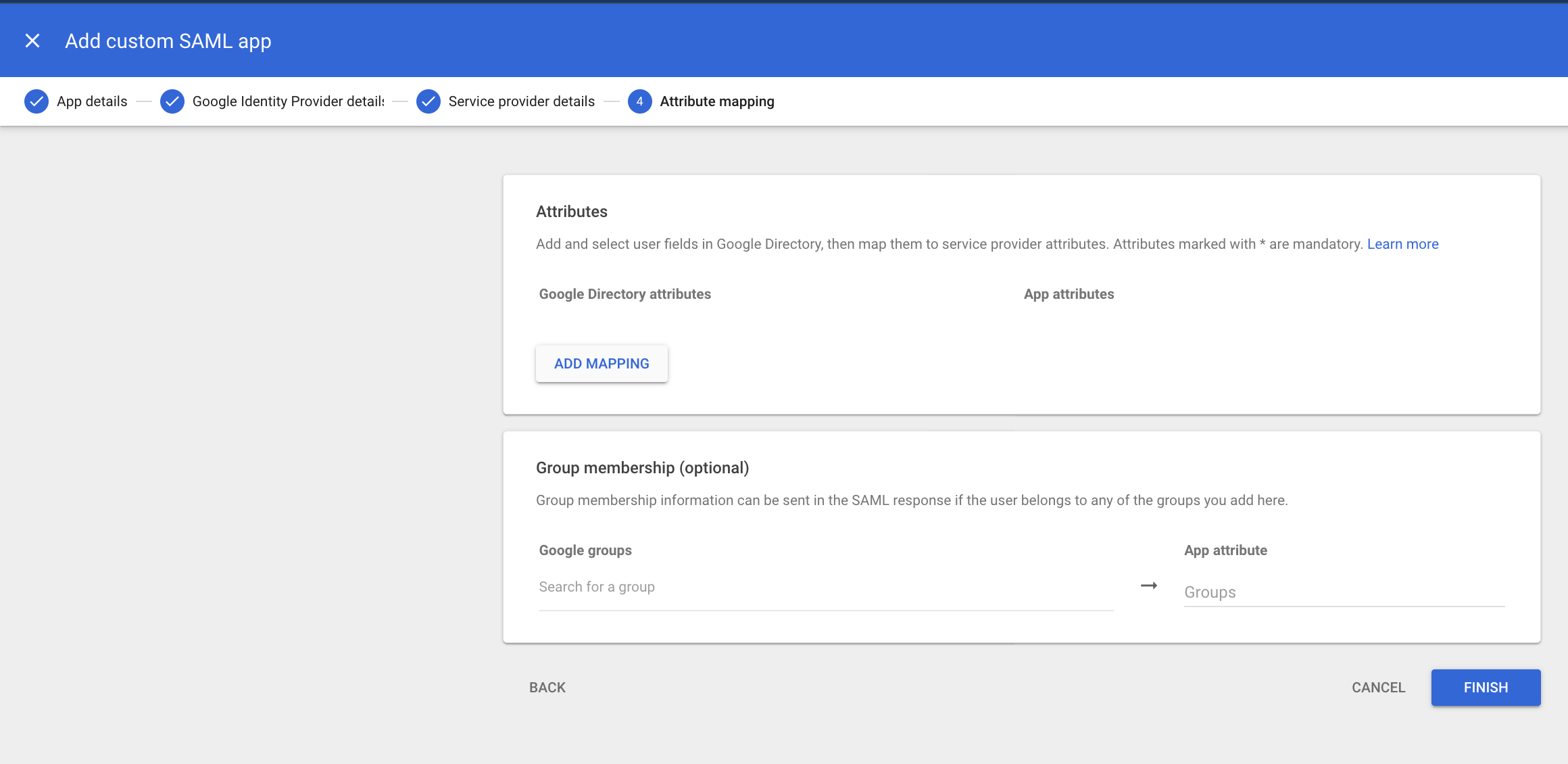
In Attribute mapping, add these attributes in the exact format below so Catalog can read them.
- First name =
firstName - Last name =
lastName - Primary email =
email
- First name =
Add to Catalog
Enter the SSO credentials you saved in Catalog.
- In Catalog, go to Settings > Authentication.
- Enter the SSO URL and Certificate.