Documentation index: llms.txt. This page is also available as markdown: append .md to this URL or send Accept: text/markdown.
Version Control
Coalesce leverages Git style version control to manage changes to your project.
Supported Providers
Before setting up Git in Coalesce, review Coalesce Git Requirements.
The Git Modal
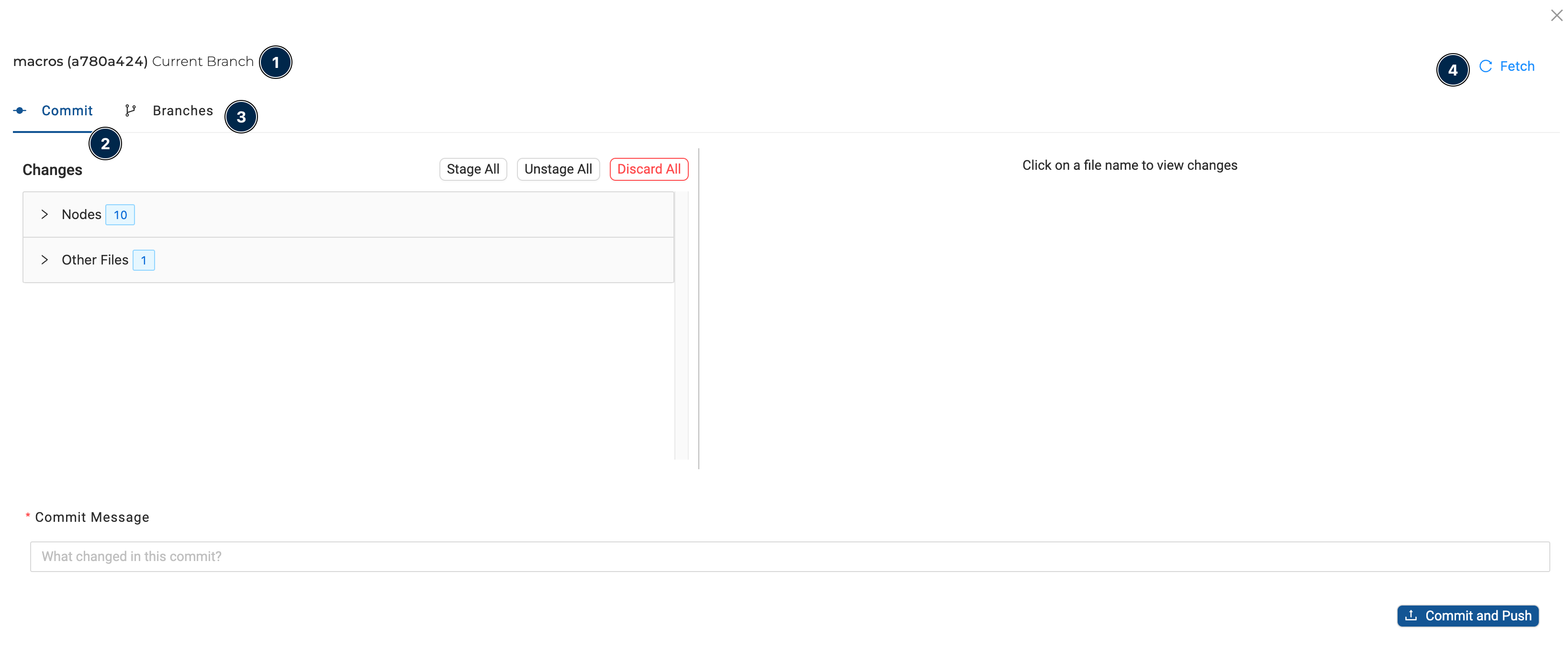
- Current Branch - This is the branch you are working on or have checked out.
- Commit - This tab contains information about your commit. A commit is any changes you’ve made while working. Learn more in Commits.
- Branches - This tab will list any available branches. Learn more in Branches.
- Fetch - Fetch will check the repository for any recent changes.
Resources
- Go through our interactive Git tutorial. DataOps Best Practices with Git and Coalesce
- Learn the basics of version control. What is version control | Atlassian Git Tutorial
- Understand how Git branches work in this interactive walkthrough. Learn Git Branching
- Git Cheat Sheet. A handy reference from GitHub.
Git basics
Learn essential Git concepts for Coalesce data transformation platform including repositories, staging, commits, branches, and merging. Understand version control fundamentals to manage data pipeline development and collaborate effectively on enterprise data warehouse projects.
Branches
TLearn Git branch management in Coalesce data transformation platform. Create, checkout, merge, and manage branches for collaborative data warehouse development, including force checkout procedures and branch lifecycle management for enterprise data projects.
Commits
Learn Git commit workflows in Coalesce data transformation platform including staging changes, writing commit messages, viewing file differences, and managing commit history. Understand best practices for tracking data pipeline changes and maintaining development integrity.
Revert a commit
earn how to safely revert Git commits in Coalesce data transformation platform. Understand the revert-the-revert workflow to maintain change tracking integrity and prepare objects for future commits without losing development history in your data warehouse projects.